More than 80% of heat-related deaths in the US affect adults over 60. Learn how to spot heat exhaustion in seniors and keep them safe this summer.
The temperature in your living room reads 82 degrees. For a younger person, this might feel slightly uncomfortable. For an older adult living alone, this environment can quickly become a medical emergency. As summer approaches, understanding how to prevent heat stroke in seniors is a critical part of maintaining independence and safety at home.
The Real Risk
The danger of extreme heat for older adults is not a theoretical concern. More than 80 percent of the estimated 12,000 people in the United States who die of heat-related causes annually are over age 60. During the 2021 Pacific Northwest heat wave, people over 65 accounted for three-quarters of the deaths in Washington state. In Portland's Multnomah County, the average age of those who perished was 70.
Older bodies simply do not adjust to sudden temperature changes as efficiently as younger ones. Glands release less sweat, and the heart does not circulate blood as effectively to release heat from the skin. Furthermore, many older adults manage chronic health conditions and take prescription medications that impair the body's ability to regulate temperature.
The threshold for danger is lower than many realize. Researchers at the Harvard T.H. Chan School of Public Health have noted that problems with hydration, sleep, and cognitive decline can occur at 85 degrees and lower. A senior does not need to be outside in the midday sun to experience heat exhaustion. A stuffy apartment with poor ventilation is enough to trigger a crisis.
A Practical Safety Checklist
Keep this list accessible and review it as the weather warms up.
- Monitor indoor temperatures. Place a reliable thermometer in the main living area. If the indoor temperature exceeds 80 degrees, it is time to turn on the air conditioning or seek a cooler environment.
- Hydrate before feeling thirsty. Thirst is a delayed indicator of dehydration, especially in older adults. Keep a pitcher of water on the kitchen counter and aim to finish it by the end of the day.
- Review medications with a doctor. Ask a healthcare provider if any current prescriptions affect heat tolerance or hydration levels. Some blood pressure medications and diuretics require specific fluid management strategies during the summer.
- Establish a daily check-in routine. Arrange for a family member or neighbor to call or visit twice a day during a heat wave. They should verify that the air conditioning is running and that the senior is drinking water.
- Identify local cooling centers. Know the location of the nearest air-conditioned public space, such as a library or community center, and have a transportation plan ready in case the home AC fails.
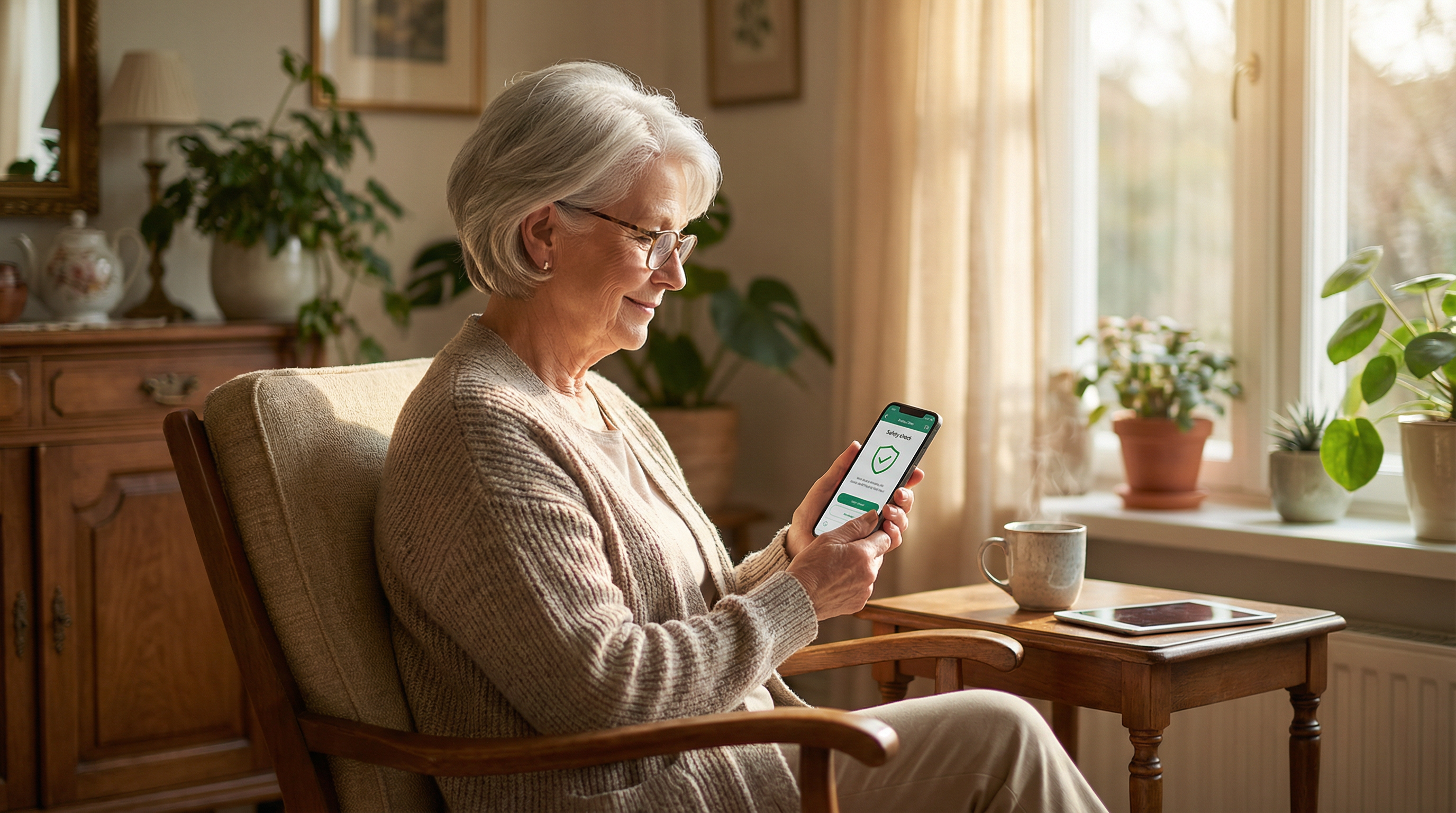
- Use wearable safety technology. A medical alert watch or senior safety app provides a direct line to help if symptoms of heat exhaustion begin to appear.
When It Becomes an Emergency
Imagine a Tuesday afternoon in July. An older woman is gardening in her backyard in Phoenix, Arizona. She feels dizzy and decides to go inside to rest. She sits in her favorite armchair, but the dizziness worsens into confusion. Her skin is dry and flushed, and her pulse is racing. She tries to stand up to reach the phone on the kitchen wall, but her legs give out, and she falls to the floor.
This scenario illustrates how quickly heat exhaustion in seniors can escalate into heat stroke. The transition from feeling unwell to losing consciousness can happen in minutes. If a senior lives alone, a fall caused by heat-related dizziness leaves them stranded on the floor, unable to call for help while their body temperature continues to rise. The speed of the emergency response in these moments dictates the outcome. Waiting for a scheduled phone call the next morning is not a viable safety plan.
How MySentry Helps
MySentry provides an active layer of protection that adapts to the specific risks older adults face during the summer months. The system operates seamlessly on a smartphone and smartwatch, eliminating the need for bulky, stigmatizing equipment.
The health monitoring capabilities track vital signs in real time. If a senior's heart rate spikes abnormally due to heat stress, the system can identify the irregularity. The fall detection feature is crucial for heat-related emergencies. If a senior faints from heat exhaustion and falls, MySentry detects the impact. If the user does not respond within 30 seconds, the system automatically alerts emergency contacts and the 24/7 professional monitoring team.
For situations where a senior feels ill but has not fallen, the panic alarm offers immediate assistance. A single tap on the watch or a simple voice command triggers a call for help. The monitoring team receives the user's live location and health data, providing first responders with the exact context they need before they arrive at the door.
For families looking to protect their aging parents this summer, explore how it works and review our pricing options. You can also learn more about our solutions for seniors, compare our features, and read about different use cases to see how MySentry supports independent living.
Key Takeaways
- Adults over 60 account for more than 80 percent of heat-related deaths in the United States.
- Physiological changes and certain medications make older adults highly susceptible to heat exhaustion, even at temperatures below 85 degrees.
- Proactive hydration and monitoring indoor temperatures are essential daily habits during the summer.
- Heat exhaustion can rapidly cause dizziness and fainting, leading to dangerous falls for seniors living alone.
- MySentry's fall detection, health monitoring, and voice-activated panic alarm ensure that help is dispatched immediately during a heat-related medical emergency.
Dedicated to bringing you the latest insights on safety, health, and independence.
Experience True
Peace of Mind
Join thousands of others who have reclaimed their independence with MySentry.
Start 7-Day Free Trial