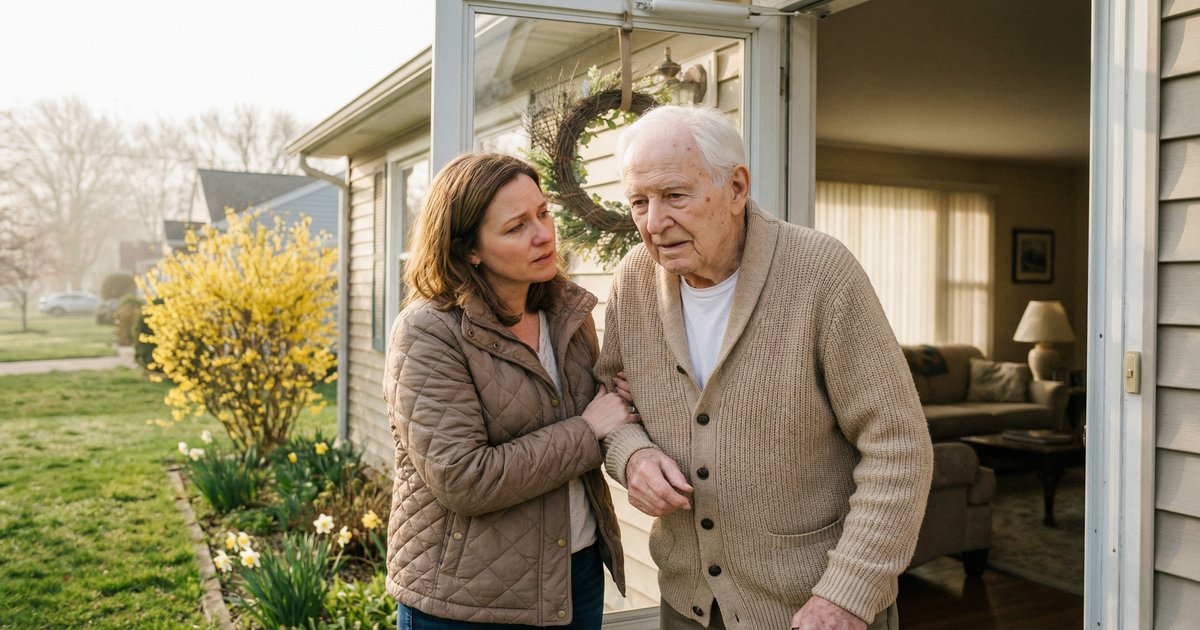
Six in ten people with dementia will wander at least once. Learn the warning signs, practical prevention steps, and how real-time monitoring technology can protect your loved one before a quiet afternoon becomes an emergency.
The front door clicks shut at 2:00 AM. You wake up, walk down the hallway, and find the house empty. Your father, who was diagnosed with early-stage Alzheimer's last year, is gone. The street outside is dark, the temperature is dropping, and you have no idea which direction he walked. For thousands of families managing memory care at home, this scenario is a constant, exhausting fear. The responsibility of keeping a loved one safe from their own confusion requires vigilance that no single person can maintain around the clock.
The Real Risk
The danger of memory-related elopement is a documented crisis that affects millions of households. According to the Alzheimer's Association, six in ten people living with dementia will wander at least once. Many will do so repeatedly. This behavior is not limited to the late stages of the disease. It often begins early, triggered by confusion, a desire to fulfill a past obligation like going to work, or simply searching for a familiar place that no longer exists.
Recent data highlights the severity of this exposure. Researchers at the University of Florida found that if a person with dementia is not found within 24 hours, they face a 46 percent chance of serious injury or death. The risks multiply during the spring and summer months. Warmer weather encourages more outdoor activity, which increases the likelihood of a senior becoming disoriented away from home. A change in routine, a noisy environment, or even a shadow on the floor can prompt a sudden departure.
The threshold for danger is lower than many realize. A senior does not need to walk miles to experience a crisis. A confused individual can easily slip on a wet driveway, become dehydrated in a neighborhood park, or wander into a busy intersection just blocks from their front door. When a family member goes missing, the speed of the response dictates the outcome. Relying solely on locked doors is insufficient because determined individuals often find a way out.
A Practical Safety Checklist
Keep this list accessible and review it as you adapt your home environment to support dementia wandering safety.
- Install secure locks out of sight. Place deadbolts high or low on exterior doors where a person with memory loss is less likely to look.
- Camouflage exit points. Paint doors the same color as the surrounding walls or hang a curtain over the entryway to reduce the visual cue to leave.
- Establish a daily routine. Structure the day with engaging activities and exercise to reduce the restlessness and anxiety that often precede wandering.
- Secure car keys immediately. A person living with dementia may forget they can no longer drive safely. Remove access to all vehicles to prevent a driving emergency.
- Alert your neighbors. Inform trusted people on your street about the diagnosis so they can call you if they see your family member walking alone.
- Keep a recent photograph handy. Have a current, close-up picture ready to provide to local law enforcement if a search becomes necessary.
- Use wearable safety technology. A reliable GPS tracker for dementia patients provides a direct way to locate your loved one before a situation escalates.
When It Becomes an Emergency
Picture a Tuesday afternoon in April. A grandfather is gardening in his fenced backyard in Seattle. He becomes disoriented, opens the side gate, and begins walking down the sidewalk. He thinks he is heading to a hardware store he visited twenty years ago. Within fifteen minutes, he is completely lost in an unfamiliar neighborhood. He trips over an uneven paving stone and falls hard onto the concrete.
This scenario illustrates how quickly a quiet afternoon becomes a medical emergency. The transition from safe to stranded happens in minutes. If a senior falls while wandering, they may be unable to call for help or articulate where they are to a stranger. Standard advice often focuses on securing the house, but securing the house does not protect a senior who slips out during a moment of distraction.
Furthermore, the physical toll of wandering exacerbates the danger. A senior who has been walking for hours may experience severe dehydration, heat exhaustion, or hypothermia depending on the season. Their cognitive impairment prevents them from seeking shelter or asking for directions. Waiting for a passerby to notice a fallen senior is not a reliable plan. You need a system that actively monitors their location and health status, bridging the gap between a locked door and a safe return.
How MySentry Helps
MySentry runs quietly in the background on a smartphone and smartwatch. You do not need to purchase a separate, stigmatizing tracking device that your loved one might refuse to wear. The system adapts to the specific risks older adults face, providing an active layer of protection for dementia safety at home and outdoors.
The location sharing feature allows you to see exactly where your family member is at any time. If they leave the house unexpectedly, you can track their movements in real time on your own device. This eliminates the frantic searching and allows you to intercept them quickly.
The fall detection capability uses device sensors to identify a sudden drop. If a senior falls while wandering and does not respond within 30 seconds, the system automatically alerts your emergency contacts and the 24/7 professional monitoring team. This ensures that a senior wandering alert is generated even if the individual is unconscious or unable to speak.
The health monitoring tools track vital signs like heart rate and oxygen levels. If a senior experiences heat exhaustion or physical stress while lost, the system identifies the irregularity. For situations where the senior feels scared or confused but has not fallen, the panic alarm offers immediate assistance. A single tap on the watch or a voice command triggers a silent alert. The monitoring team receives the live GPS location and health data, providing first responders with crucial context before they arrive.
For families looking to protect their aging parents, explore how it works and review our pricing options. You can also learn more about our solutions for seniors, compare our features, and read about different use cases to see how MySentry supports independent living.
Key Takeaways
- Six in ten people living with dementia will wander at least once, making Alzheimer's wandering prevention a critical priority for families.
- The risk of serious injury increases significantly if a wandering senior is not located within the first 24 hours.
- Securing doors, hiding keys, and establishing daily routines are effective steps to reduce the likelihood of memory-related elopement.
- A senior wandering alert system is essential because a confused individual can easily fall or become injured while lost.
- MySentry combines fall detection for dementia patients, location tracking, and 24/7 monitoring to ensure help is dispatched immediately during an emergency.
Dedicated to bringing you the latest insights on safety, health, and independence.
Experience True
Peace of Mind
Join thousands of others who have reclaimed their independence with MySentry.
Start 7-Day Free Trial