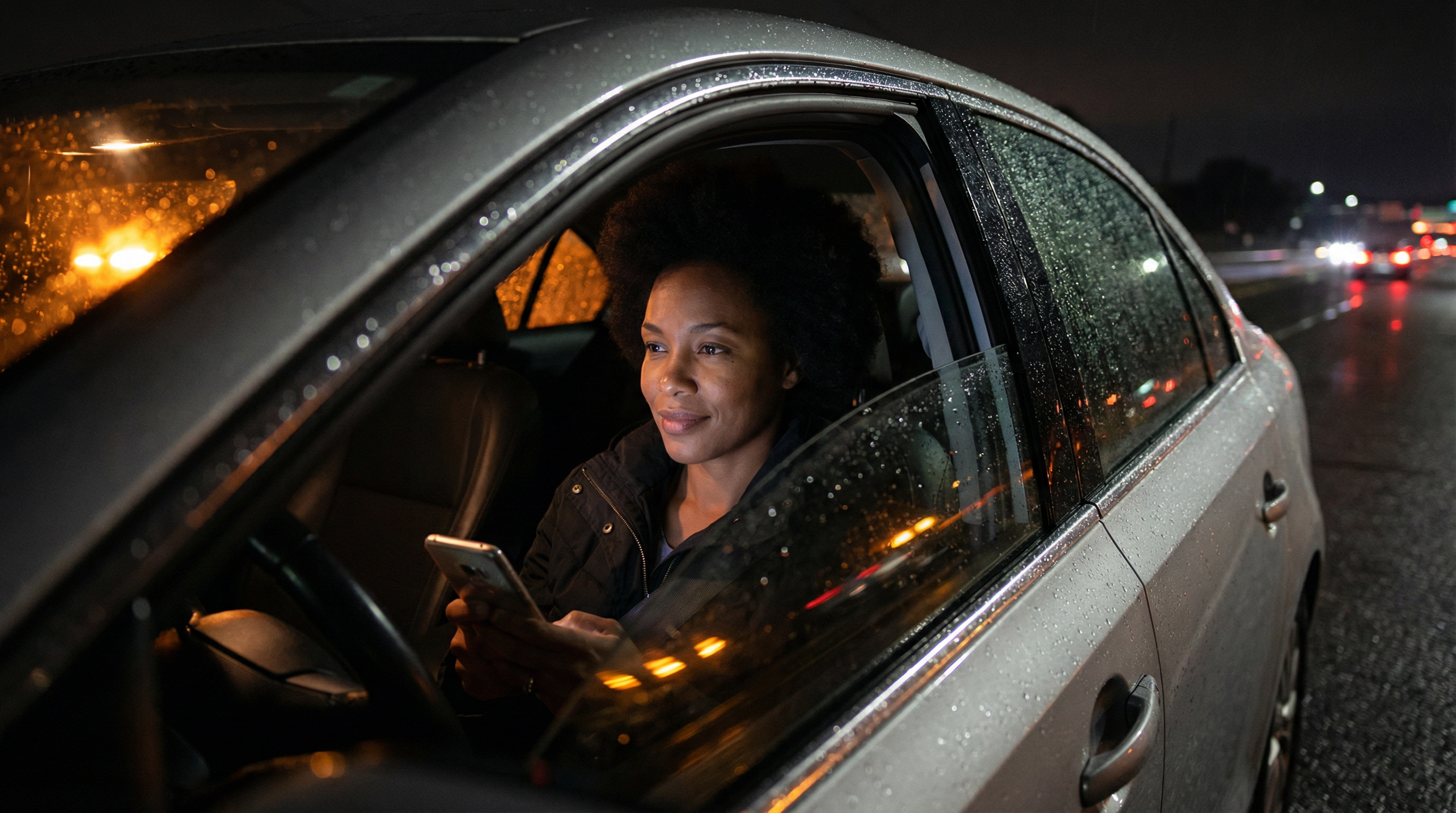
Your car just broke down on a dark road and you're alone. Here's what to do in the first 5 minutes, what to avoid, and how to make sure help finds you fast.
The Real Risk
According to the U.S. Bureau of Justice Statistics and FBI data, roughly 63,000 violent crimes occur at gas stations and convenience stores every year. Carjackings, in particular, disproportionately target women at roadside stops. A stranded vehicle on a dark shoulder is an even more exposed situation than a gas station, because you have fewer options for escape and fewer people around.
The physical danger from the road itself is real too. A 2019 study by the Insurance Institute for Highway Safety found that women wearing seatbelts are 17% more likely to be killed in a frontal crash than men in comparable vehicles. If a breakdown leads to a secondary collision, the outcome can be severe. Speed of response matters enormously, and that starts with being prepared before you ever leave your driveway.
A Practical Safety Checklist
Keep this list in your glove box or save it to your phone. Run through it before any long drive.
Build a roadside kit. Pack a flashlight with fresh batteries, a portable phone charger, a reflective triangle or road flares, a basic first-aid kit, a bottle of water, and a warm layer. A charged power bank has ended more roadside crises than any other single item.
Share your route before you leave. Text a friend or family member your destination and your estimated arrival time. If you're more than 30 minutes late, they should check in.
Know your roadside assistance options. AAA membership costs about $70 per year and covers towing, flat tires, and lockouts. Many car insurance policies include roadside assistance. Know the number before you need it.
Keep your phone above 20% charge. This sounds obvious until the moment it isn't. A dead phone during a breakdown is a genuine safety hazard.
Identify your location as you drive. Note the last exit number or mile marker you passed. This is the first thing a dispatcher will ask for.
Download a personal safety app before your next trip. A safety app with crash detection and location sharing means that even if you can't make a call, help can still be triggered automatically.
Trust your read of the situation. If a stranger pulls over and something feels off, keep your doors locked. You can lower your window two inches and ask them to call 911 on your behalf.
When It Becomes an Emergency
Picture this: you're driving home from a late shift at the hospital in Memphis, Tennessee. It's just after midnight. Your rear tire blows out on I-240, and you manage to pull onto the shoulder. You call AAA, but the wait time is 90 minutes. While you're sitting there, a car slows down and parks behind you. The driver gets out.
This is the scenario that most roadside safety advice doesn't address. The standard guidance, "stay in your car," is correct. But staying in your car only protects you if someone knows where you are and can respond quickly. A passive location share to a friend who is asleep doesn't close that gap. What you need is a system that actively monitors the situation and can escalate to emergency services without you having to make a phone call.
The same logic applies to a crash. If your car is struck by another vehicle and you're unconscious, you cannot call for help. The first five minutes after a serious accident are when emergency response makes the biggest difference in survival outcomes. Waiting for another driver to stop and call 911 is not a plan.
How MySentry Helps
MySentry runs quietly in the background on your existing smartphone and smartwatch. You don't need a separate device. You don't need to remember to activate anything.
The crash detection feature uses your phone's sensors to identify a collision. If it detects a crash and you don't respond within 2 minutes, it automatically alerts your emergency contacts and MySentry's 24/7 monitoring team. They receive your live GPS location, your health data from your wearable, and live audio from the scene. First responders get context before they arrive, which changes outcomes.
The panic alarm works for the scenario where you're not injured but you're scared. One tap on your phone or watch, or a voice command, triggers a silent alert. Your contacts are notified with your location. No one around you needs to know you've called for help.
For women who drive alone regularly, whether for work, commuting, or long-distance travel, this is the kind of backup that makes the difference between a bad night and a catastrophic one. See how it works and explore our plans to find the right fit. You can also read more about MySentry for women, explore the full range of safety features, and compare MySentry to other solutions.
Key Takeaways
A car breakdown on a dark road is one of the highest-risk situations a woman can face while driving alone.
Preparation before you leave, including a roadside kit, a shared route, and a charged phone, reduces your exposure significantly.
Stay in your locked vehicle and avoid accepting help from strangers who pull over uninvited.
Crash detection technology can trigger an emergency response automatically if you're unable to make a call.
A panic alarm gives you a discreet, one-tap way to alert your contacts without drawing attention.
MySentry combines crash detection, panic alarm, location sharing, and 24/7 monitoring in a single app on your existing phone.
Dedicated to bringing you the latest insights on safety, health, and independence.
Experience True
Peace of Mind
Join thousands of others who have reclaimed their independence with MySentry.
Start 7-Day Free Trial